Early detection of venous disorders: observe visible changes!
VENENCLINIC St. Gallen
9000 St. Gallen
VENENCLINIC Zurich
8004 Zurich
VENENCLINIC Chur
7000 Chur
VENENCLINIC Engadin
7513 Silvaplana

The medical examination includes taking the medical history, visual inspection, and palpation of the legs. An experienced physician “sees” with their hands. The assessment of leg complaints begins with a thorough case history (anamnesis). All relevant information about the course of the condition and symptoms is recorded.
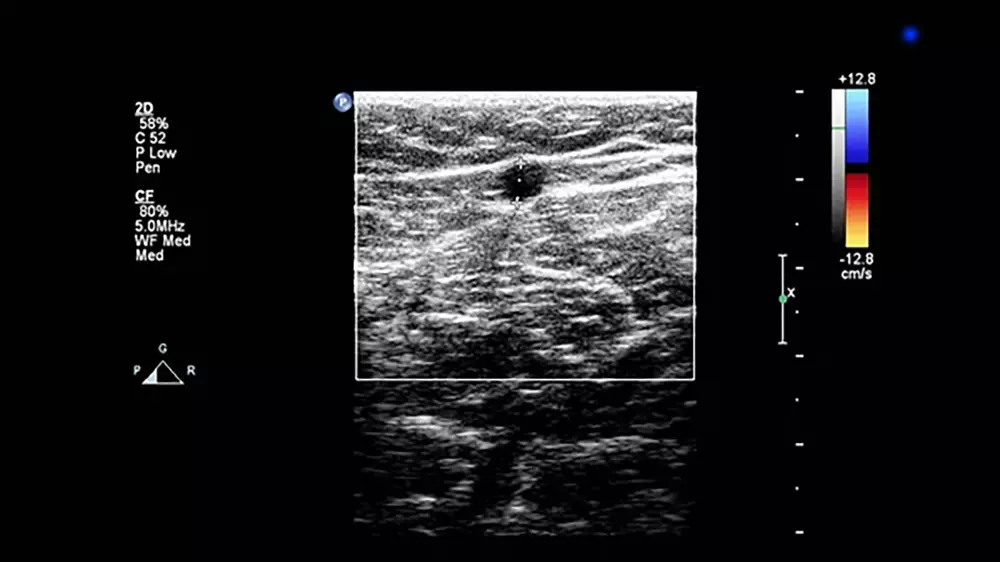
Doppler ultrasound is a diagnostic method that uses sound waves to measure the speed and direction of blood flow in vessels, providing information about circulatory disorders or vascular narrowing.
The Doppler device is small, usually no larger than a cigarette pack, with a pen-like probe. It emits ultrasound waves that are reflected by flowing blood, detected by the probe, and converted into acoustic signals that can be heard as a rushing sound. This method allows assessment of the superficial and deep venous systems. It also enables tracking of the course of varicose veins to their origin, even if only visible on the lower leg. Specific maneuvers such as gentle compression of the leg muscles, pressure on varicose veins, or asking the patient to cough provide important information about valve function and help detect thrombosis.
Ultrasound is painless, cost-effective, and provides valuable information about the condition of the veins.
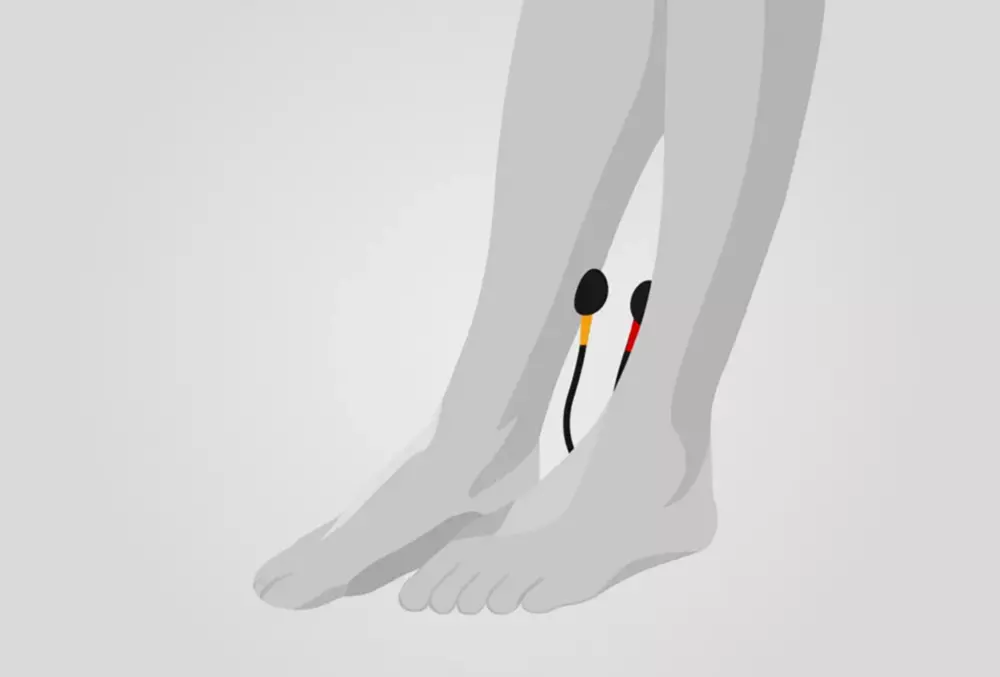
Light-reflection rheography is a non-invasive diagnostic method used to assess venous function in the legs. It uses infrared light to detect changes in skin reflection and evaluate venous return.
Measuring venous refill time using infrared sensors – known as light-reflection rheography – completes the routine examination of venous disease. It measures the time required for the venous reservoirs in the legs to refill after being emptied. This provides insight into overall venous function and the severity of venous insufficiency. Sensors, similar to ECG electrodes, are placed on both lower legs. After recording a baseline curve, the calf muscle pump is activated by moving the feet up and down 10–15 times. The refilling process is then recorded as a curve. This test is also quick, easy to perform, and completely painless.
Some practitioners use photoplethysmography instead, which provides similar measurement results.
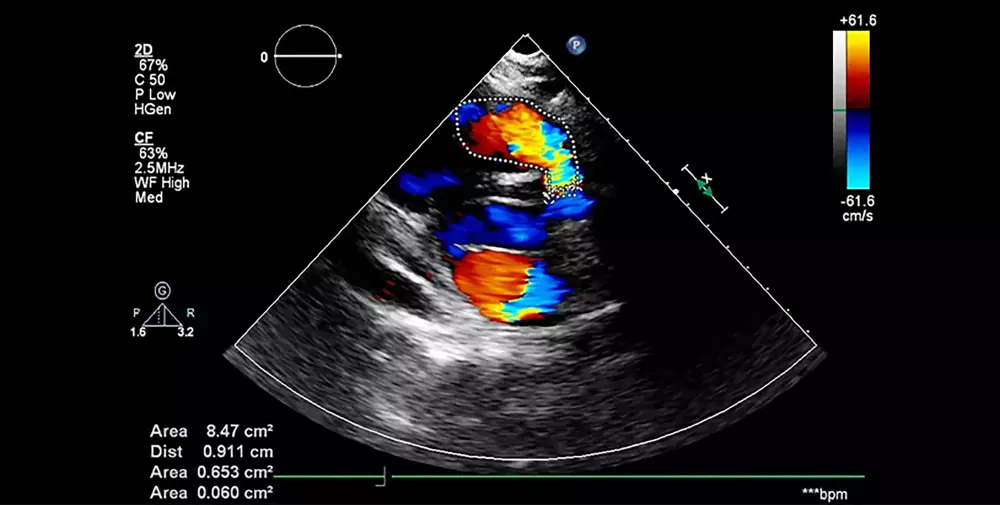
Color duplex ultrasound combines sound waves with color coding to visualize the structure and function of blood vessels, display blood flow in real time, and assess vein valves and possible thrombosis.
Although clinical examination, Doppler ultrasound, and venous refill time analysis provide diagnoses in nearly 90% of cases, some questions may remain. In such cases, an advanced and equally painless method – duplex ultrasound – is used. It has largely replaced contrast X-ray imaging. A color-coded ultrasound image provides detailed information about vein function, blood flow, valve structure, and potential thrombosis.
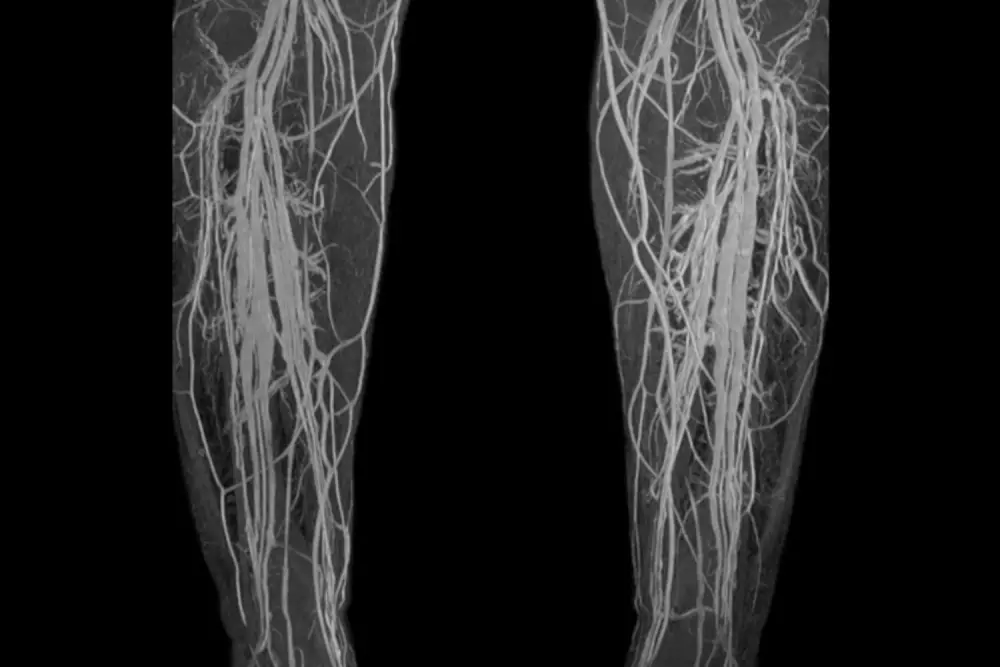
Phlebography is a procedure in which a contrast agent is injected into the veins to make them visible on X-ray images and detect abnormalities such as narrowing or thrombosis.
During an X-ray examination of the veins, a contrast agent is injected into a vessel on the top of the foot, allowing all leg veins to be visualized. This method is used less frequently today, as most diagnostic questions can be answered with the previously mentioned techniques.
Today, phlebography is mainly used when duplex ultrasound does not provide clear results or when identifying the origin of atypical varicose veins (varicography).
We understand that an aesthetic treatment needs to be carefully considered. We are therefore happy to take the time to answer all your questions during a no-obligation initial consultation. Arrange your consultation appointment at one of our VENENCLINICs today.
If you would like a brief online preliminary clarification before your consultation, you can also contact us by e-mail.
No matter which way you want to contact us - we look forward to hearing/reading from you!


