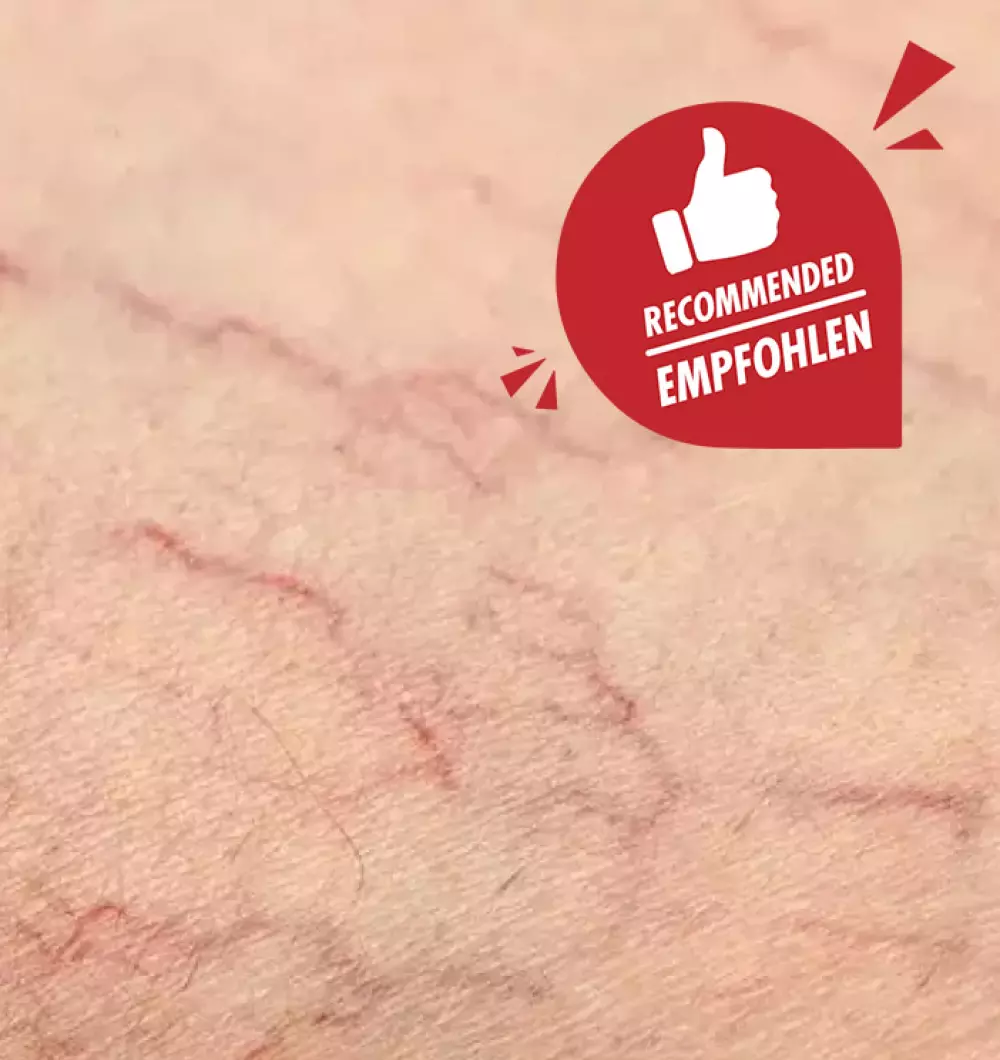
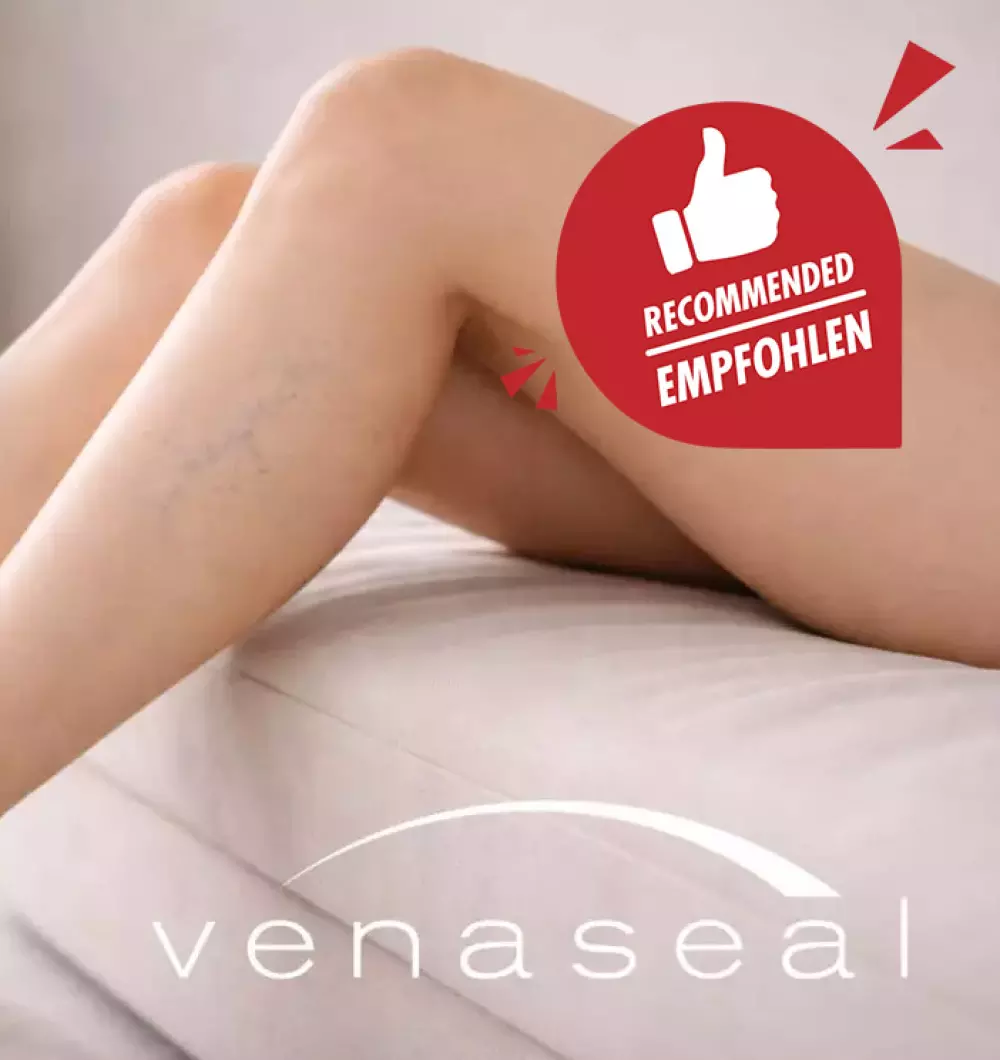
Early detection of venous disorders: observe visible changes!
VENENCLINIC St. Gallen
9000 St. Gallen
VENENCLINIC Zurich
8004 Zurich
VENENCLINIC Chur
7000 Chur
VENENCLINIC Engadin
7513 Silvaplana

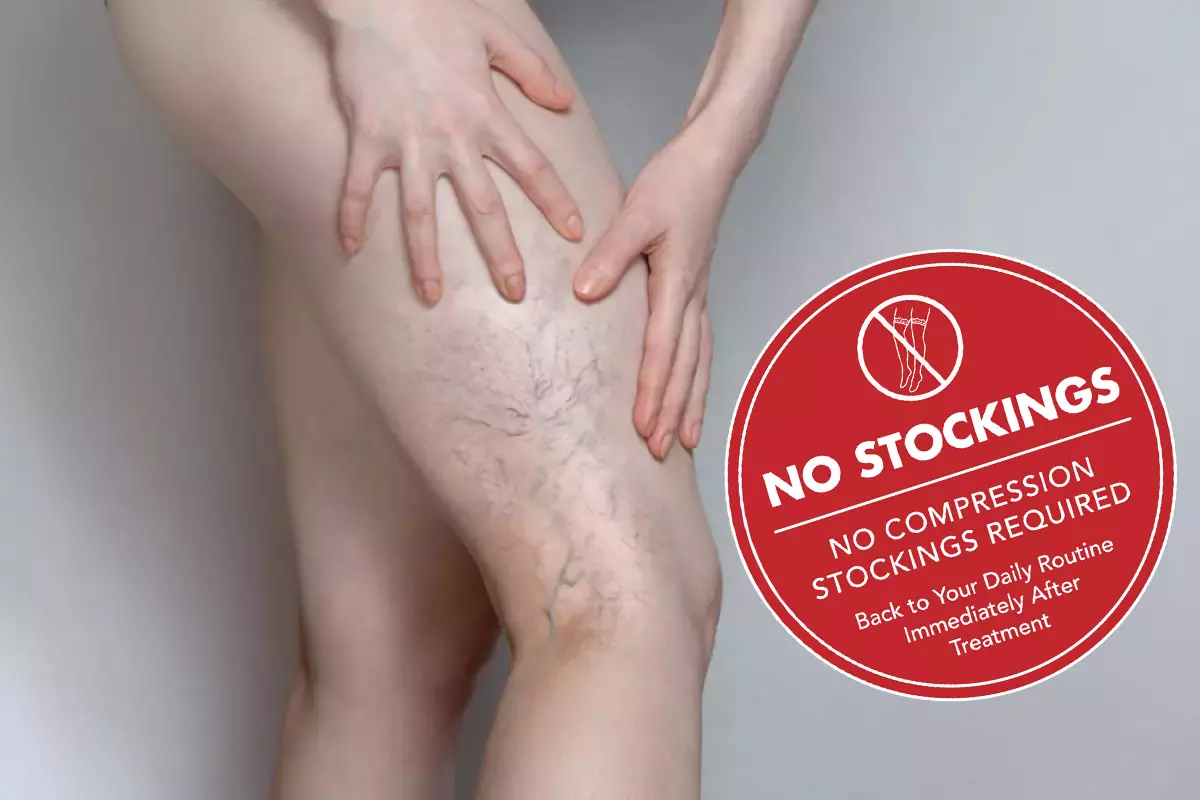
Successful spider vein treatment always requires an individualised treatment plan. In some cases, the underlying varicose veins must first be treated if they are responsible for the visible spider veins. Depending on the findings, this may involve procedures such as ELVeSTM, vein stripping, mini phlebectomy or foam sclerotherapy. The spider veins themselves are then treated in a second step.
At VENENCLINIC, spider veins are treated using our proprietary Easy Concept. By combining the latest treatment technologies, therapy is virtually painless, requires no bulky bandages or routine compression stockings, and usually allows patients to return to normal daily activities immediately. Sports, swimming, work and even tanning beds are generally possible straight after treatment.

Foam sclerotherapy is now considered the gold standard for spider vein treatment. The foam gently irritates the inner lining of the vein, causing it to seal shut and close permanently. At VENENCLINIC, we also use our proprietary Magic Foam™ when appropriate. Its highly stable microfoam structure may further enhance treatment effectiveness.
Ideally, the body gradually absorbs the sealed vein completely. However, in many cases only the inner seal dissolves initially, meaning the vessel may remain temporarily visible. For this reason, multiple treatment sessions are normal and form part of the treatment concept.
It is important to understand that spider veins represent only the visible part of a much larger network of blood vessels. Many of the connecting vessels lie deeper beneath the skin and are invisible. For long-lasting results, these feeder vessels should also be treated whenever possible. The finer and redder the spider veins, the more challenging they are to treat and the more treatment sessions may be required.
In most cases, approximately 5 to 6 treatment sessions are needed to achieve a clearly visible improvement. The exact number depends on your body's individual response as well as the type, size and colour of the veins.
Laser therapy is primarily used today as a complement to foam sclerotherapy and is particularly suitable for very fine red spider veins. At VENENCLINIC, we developed the SkleroLase™ technique, which specifically complements foam sclerotherapy for the treatment of the finest red vessels.
Whether laser treatment is recommended depends on your skin type, the colour of the veins and your individual findings. In most cases, however, foam sclerotherapy remains the foundation of treatment because it also reaches the deeper feeder veins.
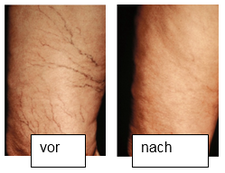
Treatment with foam sclerotherapy or SkleroLase™ usually takes only a few minutes. Afterwards, only a small dressing is applied for a short period. Bulky bandages and compression stockings are generally not required.
There are usually no special restrictions following treatment. Sports, swimming, work and tanning beds can generally be resumed immediately.
It is normal for the treated areas to look as though they have been lightly bruised. Small bruises, mild swelling or firm areas along the treated veins are common, harmless reactions that disappear over the following days or weeks. LYMAN 200'000 heparin ointment helps accelerate the fading of these discolourations and is best applied to the treated areas in the evening.
The first treatment results can usually be assessed after just a few days. If the spider veins initially appear more blurred or more noticeable, this is often a sign that treatment has been successful and the body's natural healing process has begun. Greenish-brown discolouration also commonly indicates that the treated vessel is being broken down.
Several treatment sessions are usually required before the final result is achieved. On average, 2 to 6 sessions are performed at intervals of two to three weeks. Depending on the severity of the condition, however, significantly more treatments may be necessary. Temporary hyperpigmentation can occur but usually fades completely over time.
You may return to the sun just a few days after treatment. The temporary discolouration described above depends on your individual skin type rather than sun exposure. In fact, a light tan from the sun, tanning beds or self-tanning products can even help make any remaining discolouration or residual spider veins less noticeable.
Different treatment methods may be recommended depending on your individual findings. Learn more about our treatment options below:
Treatment is preceded by a mandatory professional examination including ultrasound and plethysmography. This vein assessment is covered by all health insurance providers.
| Sclerotherapy | CHF 160.00-300.00 |
|---|
| SkleroLase™ treatment (in combination with foam sclerotherapy) | CHF 350.00 |
|---|---|
| SkleroLase™ treatment (performed by doctor) | CHF 500.00 |
We understand that an aesthetic treatment needs to be carefully considered. We are therefore happy to take the time to answer all your questions during a no-obligation initial consultation. Arrange your consultation appointment at one of our VENENCLINICs today.
If you would like a brief online preliminary clarification before your consultation, you can also contact us by e-mail.
No matter which way you want to contact us - we look forward to hearing/reading from you!