Early detection of venous disorders: observe visible changes!
VENENCLINIC St. Gallen
9000 St. Gallen
VENENCLINIC Zurich
8004 Zurich
VENENCLINIC Chur
7000 Chur
VENENCLINIC Engadin
7513 Silvaplana

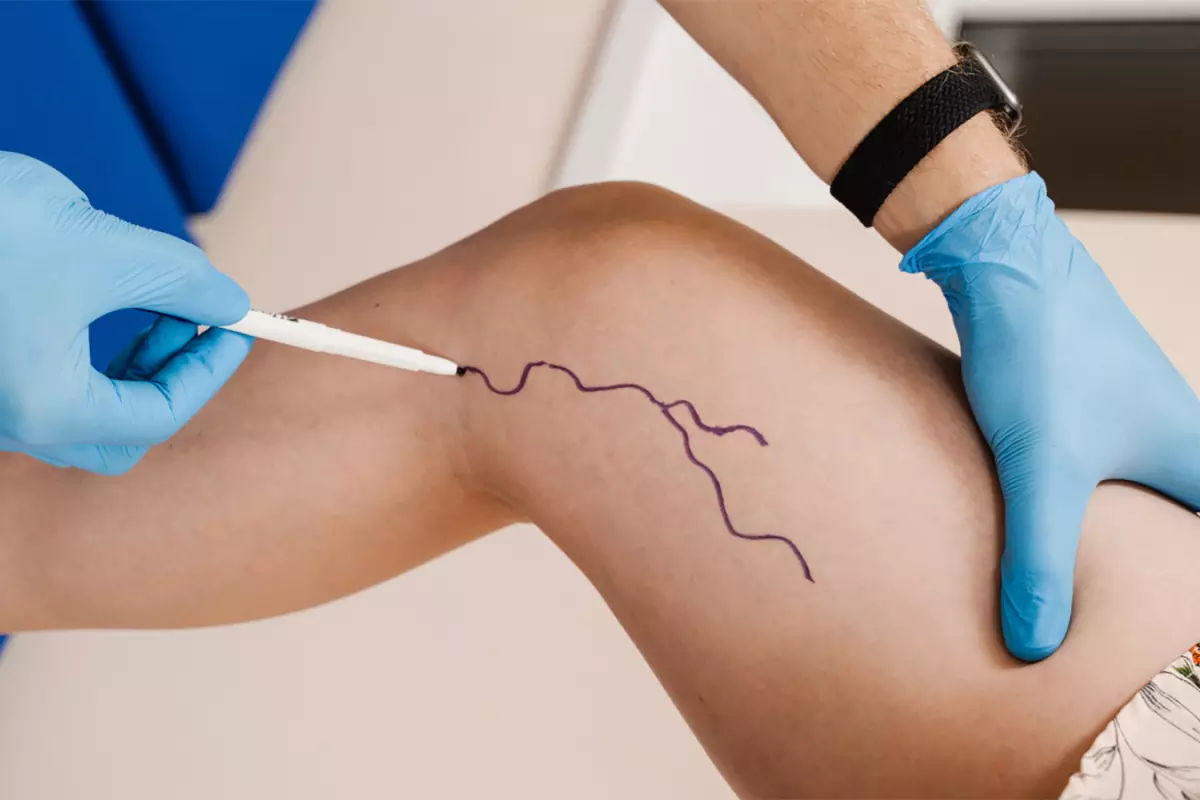
But medicine has also made great progress in the field of surgery in recent years. Thanks to the surgical techniques we have refined, an operation only takes 40-60 minutes. The procedure can often be performed under local anesthesia or partial anesthesia; general anesthesia is not necessary. Depending on the findings and the surgical procedure, treatment can be performed on an outpatient basis in the practice (hook method) or as a short inpatient procedure (overnight hospitalization for stripping), eliminating the need for longer inpatient stays and sick leave.
The traditional stripping procedure was the standard treatment for varicose veins for decades. Despite modern alternatives, it is still performed in some hospitals – often for structural or organizational reasons. From today’s medical perspective, however, it is considered a significantly more traumatic procedure and has largely been replaced by minimally invasive techniques.
During stripping, the affected trunk vein is exposed through an incision in the groin (for the great saphenous vein) or behind the knee (for the small saphenous vein). A metal probe is inserted into the vein and advanced to the lower end of the diseased segment. The vein is then attached to the probe and completely pulled out of the leg.
This process places considerable mechanical stress on surrounding tissue. The procedure is performed under general or spinal anesthesia, as it would not be tolerable under local anesthesia.
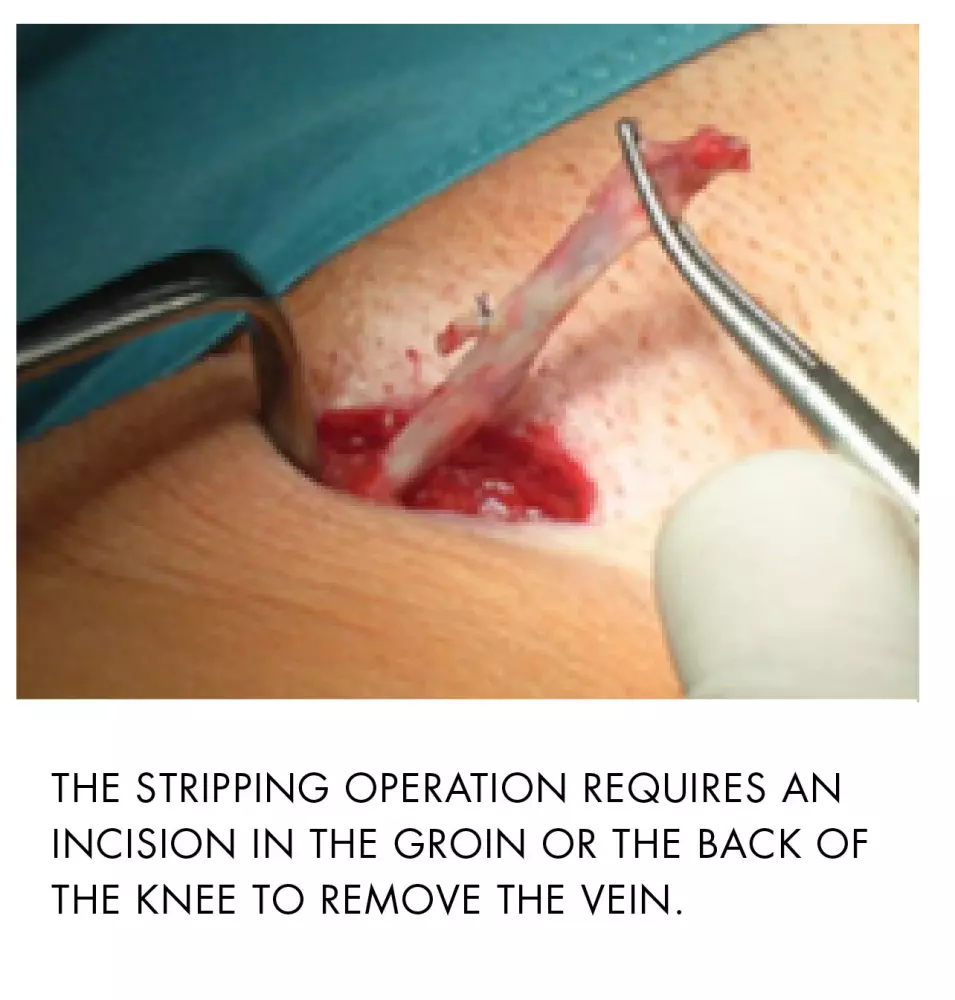
When the vein is removed, numerous side branches are torn off uncontrollably, causing bleeding into the surrounding tissue. This often leads to extensive bruising (hematomas).
These bruises form along the muscle fascia and subcutaneous tissue, frequently resulting in painful tissue adhesions. Many patients experience tension, movement-related pain, and significant limitations in daily activities for several weeks.
Depending on the extent of the procedure, relevant blood loss may occur. Patients may feel fatigued for an extended period, which explains the typical work incapacity of two or more weeks.
After stripping, compression therapy is required for several weeks to reduce swelling and bleeding. Physical rest is necessary, and sports or strenuous activity must be avoided.
Visible scars remain in the groin or behind the knee. In addition, small skin nerves may be irritated or damaged, potentially causing temporary or permanent sensory disturbances.
Modern endovenous procedures such as laser therapy or radiofrequency treatment close the diseased vein from the inside without removing it. This results in:
Numerous studies show that these minimally invasive methods achieve equal or superior long-term results with much lower physical burden.
For this reason, stripping is now considered largely obsolete. At VENENCLINIC, it has not been performed for years and has been replaced by modern endovenous techniques.
You can compare this procedure to a blackbird pulling an earthworm out of the lawn. A hook is inserted through the skin into the subcutaneous fatty tissue where the vein runs through tiny micro-incisions. The vein is grasped with the hook, pulled outwards visibly and torn off under the skin. Another micro-stitch is made to access the subcutaneous fatty tissue again and the next part of the vein is removed... and so on. In this way, it is also possible to remove large sections of vein without leaving incisions and/or scars. The micro-incisions are only 1-2mm in size. They heal so quickly and invisibly that it is possible to shower the very next day.
Of course, visible spider veins can also be treated in the same session if the patient so wishes. Immediately afterwards, a bandage is applied to the leg so that it can no longer bleed from the small punctures. The bandage can be removed the next morning and a rubber stocking is not necessary.
A surgical procedure in which the diseased trunk vein is exposed, attached to a probe, and completely removed from the leg.
After making an incision, the vein is separated from its branches, a probe is inserted, and the vein is mechanically extracted.
General or spinal anesthesia is necessary due to the mechanical stress of the procedure.
Side branches are torn off during removal, leading to bleeding, large hematomas, and painful tissue adhesions.
Yes, significant blood loss may occur, and patients may feel fatigued afterward.
Work incapacity often lasts two weeks or longer, with restricted physical activity.
Yes, compression therapy is necessary for several weeks after surgery.
Yes, visible scars remain at incision sites.
Possible risks include bruising, infection, wound healing problems, nerve irritation, sensory changes, and rarely thrombosis.
In most cases, no. Minimally invasive methods are safer, less traumatic, and allow faster recovery, making stripping largely outdated.
We understand that an aesthetic treatment needs to be carefully considered. We are therefore happy to take the time to answer all your questions during a no-obligation initial consultation. Arrange your consultation appointment at one of our VENENCLINICs today.
If you would like a brief online preliminary clarification before your consultation, you can also contact us by e-mail.
No matter which way you want to contact us - we look forward to hearing/reading from you!


